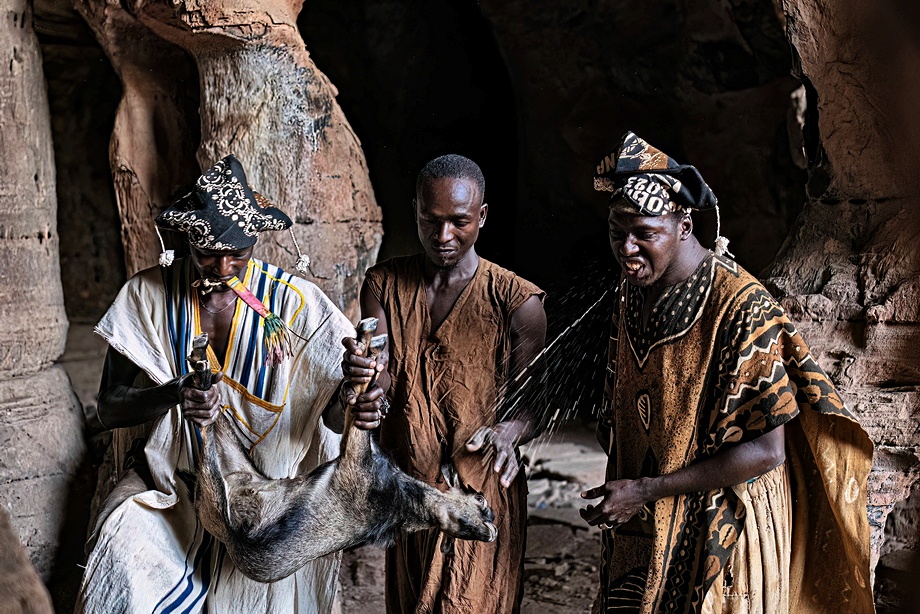
The country called Sierra Leone today has a history with a powerful Malinke connection.
The following anthropological and cultural facts show this:
● After the collapse of the Mali Empire, which had its western borders close to the northeast of Sierra Leone and to the north of Guinea, there was a dispersal of people, which saw some moving to the south and the west.
● Also, some northern coastal people who lived on the
eastern fringes of the Mali Empire, and were between what
is today Guinea-Bissau and Guinea Conakry, known as Baga-Susu-Themne, were affected by this collapse and moved south along the coast.
● The people coming from the eastern hinterlands, who were led by a man known as Farama Tami, allied
with the coastal people who had moved south from the
north.
● This is how, in 1450, a decentralised governance was
established and called the KOYA KINGDOM. The Koya
Kingdom, which extended from Cape Mount in Bong
County in present-day Liberia to the far northof Kamsar in present-day Guinea was in existence when the
Portuguese, Pedro Da Cintra, who came to the shores of Freetown in 1462.
● The Koya Kingdom existed up to 1898 with Bai Bureh of Kasse as the last king. Governing such a large area from Cape Mount in Liberia to Northern Guinea was not an easy task. Several regencies had heads who served as local chiefs. Each of those heads, known as Gbana, sought protection from the king, who was known as Bai.
● Later, with the advent of Isla,m some Islamic regent heads took the title of Alimamy. Others used Malinke linguistic titles such as Ba. Some Mande-speaking cultures used “Mansa” for male heads and “Massah” for female heads.
● In Freetown was a Malinke head whose title was Ba
Demba, from whom the present-day street name PaDemba Road was taken.
● The Koya Kingdom had a strong Malinke background, with all ethnic groups living in present-day Sierra Leone being part of the decentralised governance system and having their ethnic heads known as Gbana, after the Poro Society, a nationwide Fraternity and training ground for boys in transition into manhood, naming tradition. Similarly, the Bondo sorority is a school for teaching girls as they transition from adolescence to womanhood. They were taught home economics, child care, and basic medical and herbal knowledge for household care.
● As a result of her Malinke background, there are
standard and personal names in Sierra Leone, Liberia
and Guinea today. These names, and primarily surnames,
are found in every area where there is a strong Malinke
influence on culture.
● The Malinke influence is also reflected in the dress
culture of the people to a considerable extent. The country where the Mendes weaves the cloth, the Ronko dress woven by the Limbas, the Gara textile produced mainly in West Africa, and with which dresses that are sewn are all products
originating from Malinke cultural dress modes.
● In music instruments like the drum, called
Tamballay/Tabulay, the Xylophone/Balanji instrument and
wind instruments; String instruments like the Kora found in
varied designs in the different ethnic groups in Sierra
Leone, as in other parts of West Africa, is similar in all
the ethnic groups and has a common origin from the
Malinke culture.
● Another standard indicator of the strong Malinke
Connections are the common surnames across ethnic groups. Names like Kamara, Koroma, Conteh, Sesay, Kallon, Kanneh, Konneh, Turay/Troure, Fofanah, Tarawalie, and Senesie ,etc.are found across ethnic groups and are also common in most parts of Manding culture, West Africa, or Africa west of the
Ashanti and other cultures in Côte d’Ivoire, Ghana, and Nigeria.
● Further, there is a place name that is common in every district of Sierra Leone called Sumbuya. Sumbuya is a Malinke term meaning a place that provides a livelihood or a place of respite.