Mansa vs. Faama: Cultural Power in West African Leadership

Introduction: Rethinking Leadership through a Cultural Lens

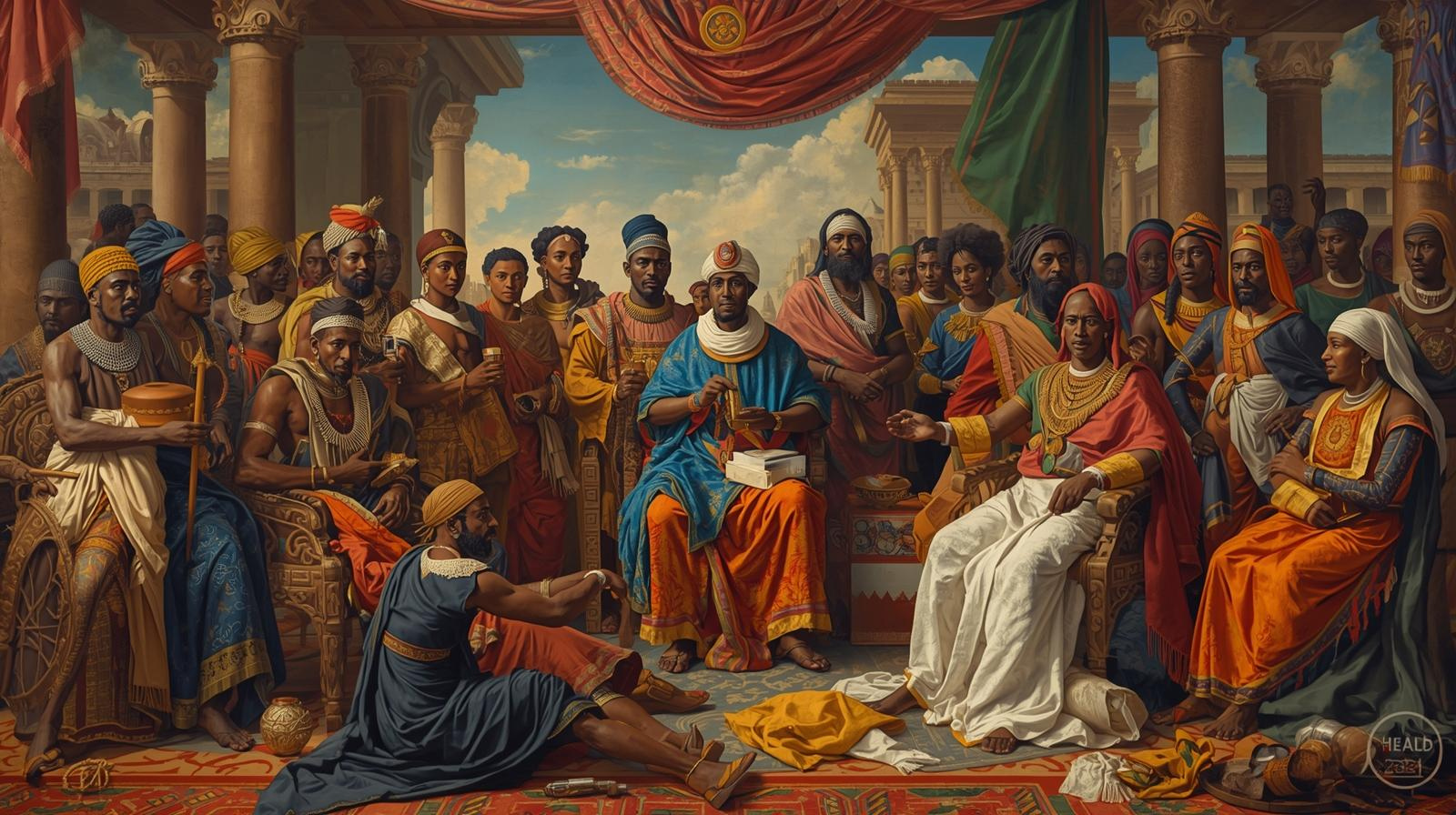
When discussions on African politics arise, the common narrative often centres on colonial legacies, corruption, and ethnic conflict. While these are significant, they can overshadow the profound influence of indigenous African political thought. Within the Mandé cultural sphere, home to the Malinké, Mandinka, Bambara, and others, power is not just political; it is moral, spiritual, and communal.

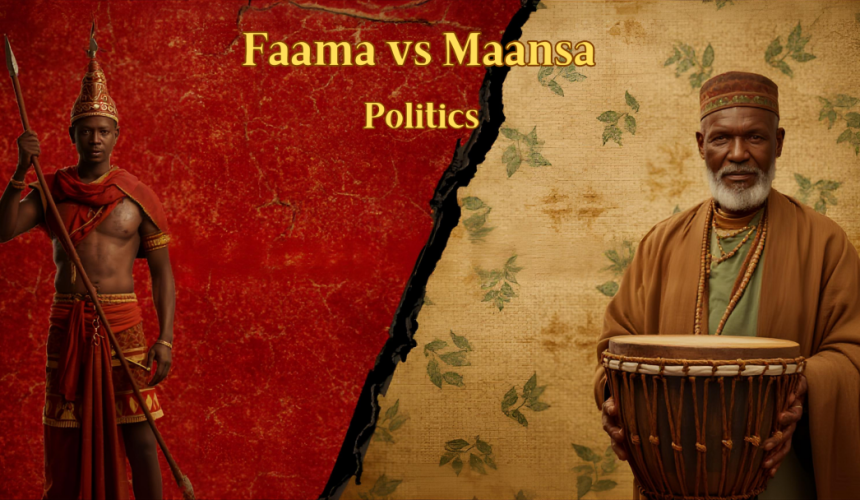
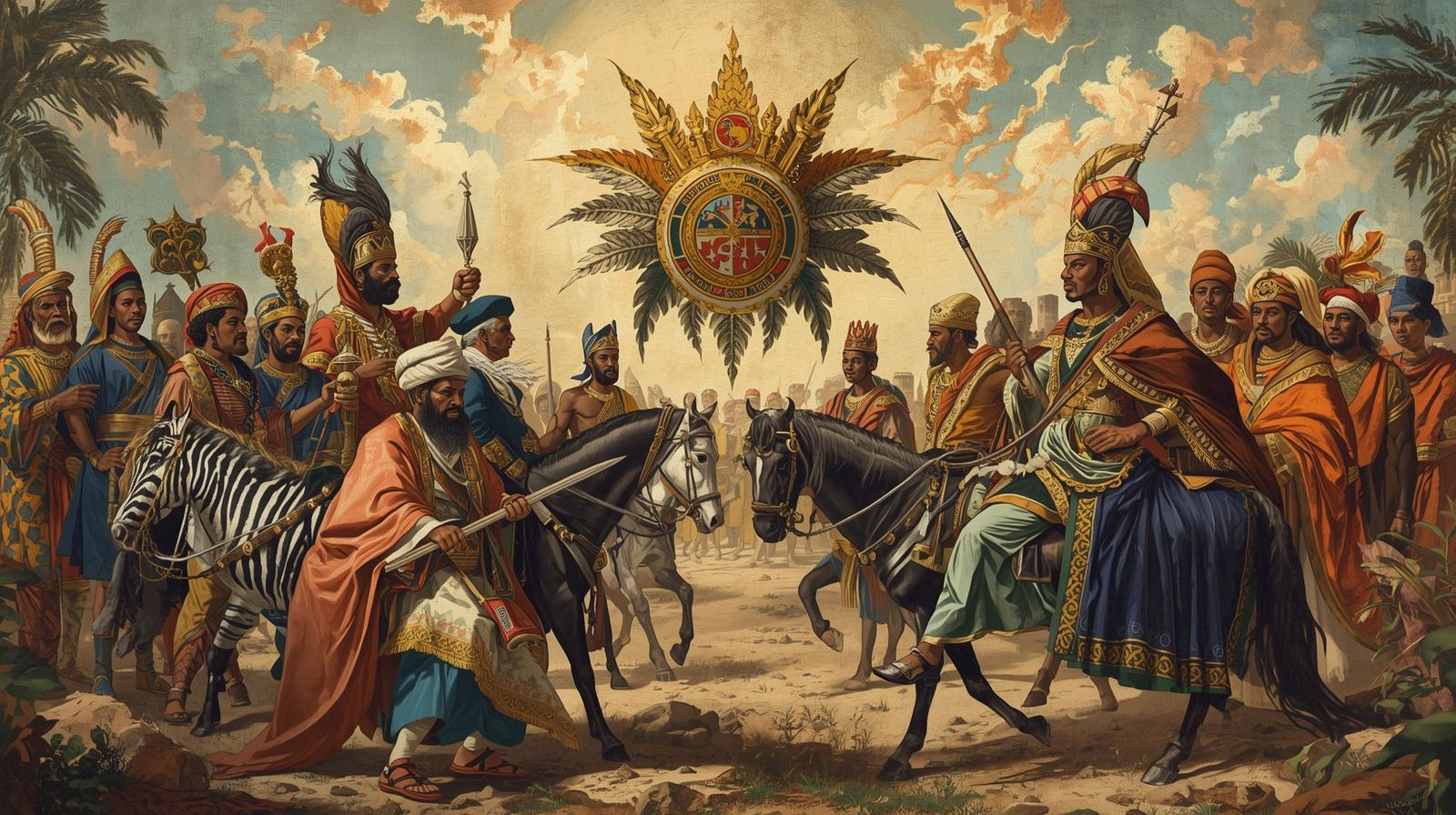
Two archetypes dominate this cultural framework: the Mansa, the ethical and culturally rooted leader, and the Faama, the military strongman whose power is based on force. These archetypes, along with the dual forces of Fadenya (rivalry) and Badenya (cohesion), continue to shape governance in countries like Sierra Leone and across West Africa (Camara, 2014).

1. Mandé Political Philosophy: An Indigenous Framework

Mandé political philosophy offers a distinctive approach to understanding leadership, one that is deeply rooted in communal morality and cultural memory. Unlike systems that prioritise bureaucratic institutions or rely on external legal frameworks, the Mandé worldview places legitimacy within the shared narrative of the people. This collective story is carefully maintained and interpreted by griots, who serve as the custodians of community history and values (Bird & Kendall, 1980).

Rather than deriving authority from legal-rational processes such as elections and formal laws, Mandé political structures emphasise the importance of moral authority, ancestral lineage, and the leader’s ability to embody the core values of the community. In this way, Mandé political thought presents a model of democracy that resonates culturally, grounding leadership in the lived experiences and traditions of its people.

2. Mansa Leadership: Power Rooted in Moral Legitimacy

The archetype of Mansa defines leadership within the Mandé cultural framework as one anchored in moral legitimacy, restraint, wisdom, and a deep connection to communal values. Unlike rulers who govern through force or coercion, Mansa’s authority is derived from ancestry and the validation of griots, the traditional custodians of history and culture. The legitimacy of the Mansa is not established by decree, but by a continual process of service to the people, responsiveness to their needs, and accountability to the stories and collective memory of the community. This is encapsulated in the Mandé proverb: “A Mansa does not rule by decree. He is summoned by the people’s needs and judged by the people’s stories.”

Historically, Sundiata Keita, the founder of the Mali Empire, serves as the quintessential example of the Mansa archetype. His leadership, as chronicled in The Epic of Sundiata, was marked by diplomacy, the observance of rituals, and the ability to unify disparate groups without resorting to coercion. Sundiata’s approach to governance emphasised consensus-building, respect for tradition, and the integration of diverse interests through moral guidance and cultural rituals.

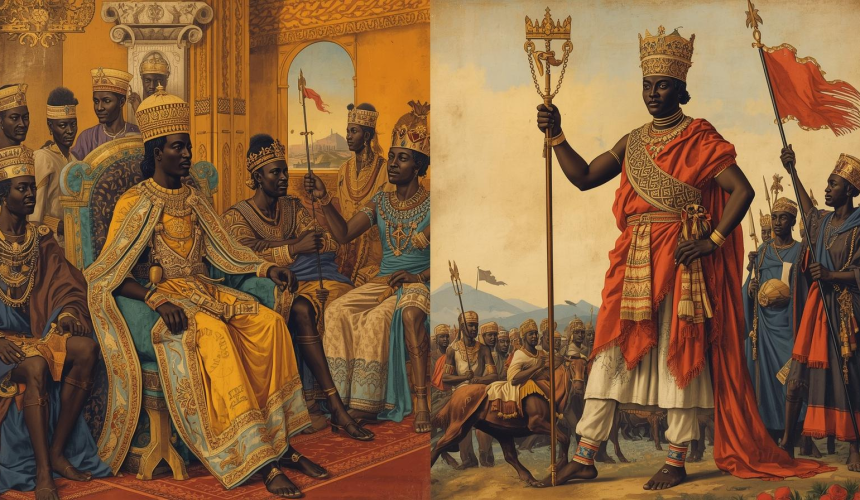
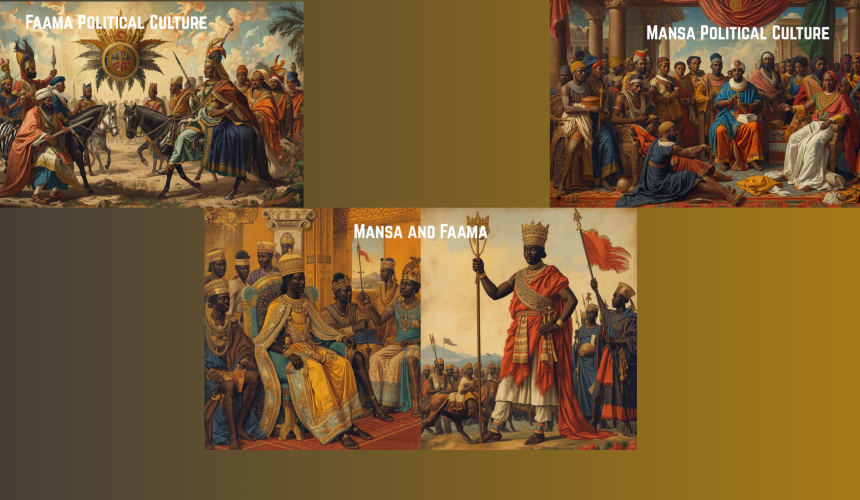
mansa political culture moral authority
Mansa Political Culture based on Moral Authority

In contemporary terms, Nelson Mandela’s leadership mirrors the qualities of Mansa. Mandela’s commitment to reconciliation, wisdom, and moral authority over revenge resonates with the ethos of Mandé leadership. His actions prioritised healing and unity, demonstrating that true power lies in the capacity to embody ethical principles and serve the collective good. Through this lens, Mansa represents a model of leadership that privileges moral legitimacy and communal harmony above personal ambition or authoritarian control.


3. Faama Authority: Rule by Force and Control

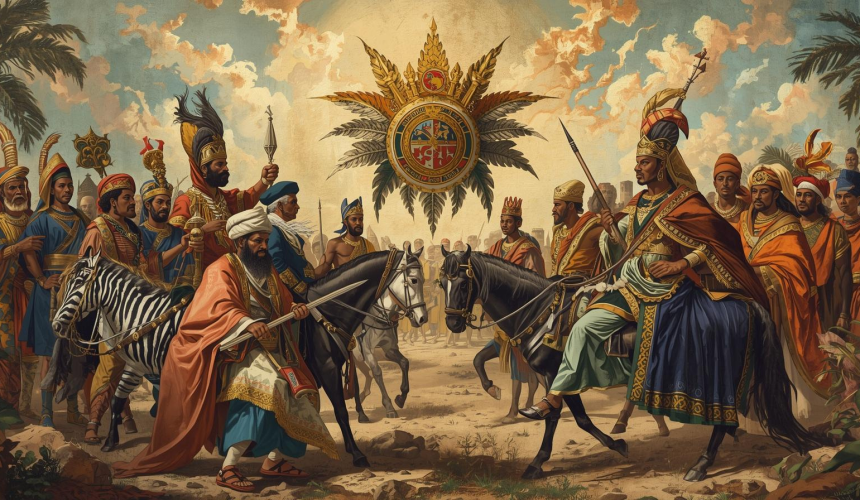
The concept of Faama authority stands in sharp contrast to the Mansa model of leadership. Rather than drawing power from moral legitimacy, communal service, or ancestral validation, the Faama’s rule is grounded in the exertion of force, military strength, and the strategic use of dominance. In this framework, loyalty is not something that is freely given by the community; instead, it is compelled through mechanisms of fear, intimidation, and coercion. The Faama maintains authority by forging alliances that are often transactional, leveraging power to suppress opposition and maintain control over resources and people.

Historically, as the Mali Empire declined, the absence of griot validation led to the emergence of local Faamas whose authority was maintained through immediate, often violent, displays of power. These leaders prioritised short-term gains and dominance over the long-term legitimacy or cohesion that characterised Mansa-style governance. The reliance on violence and intimidation, rather than on shared stories and communal memory, marked a significant departure from the traditions that once unified society (Camara, 2014).

Modern parallels to Faama leadership can be observed in the military regimes that took power in Sierra Leone during the 1990s, as well as in Liberia under Samuel Doe. These regimes exemplified the characteristics of Faama authority operating through authoritarian control, the establishment of patrimonial networks, and the systematic suppression of dissent. In these contexts, leadership was maintained not through consensus or moral guidance, but through the concentration of power, exclusionary alliances, and the use of force to stifle opposition and perpetuate control (Chabal & Daloz, 1999).

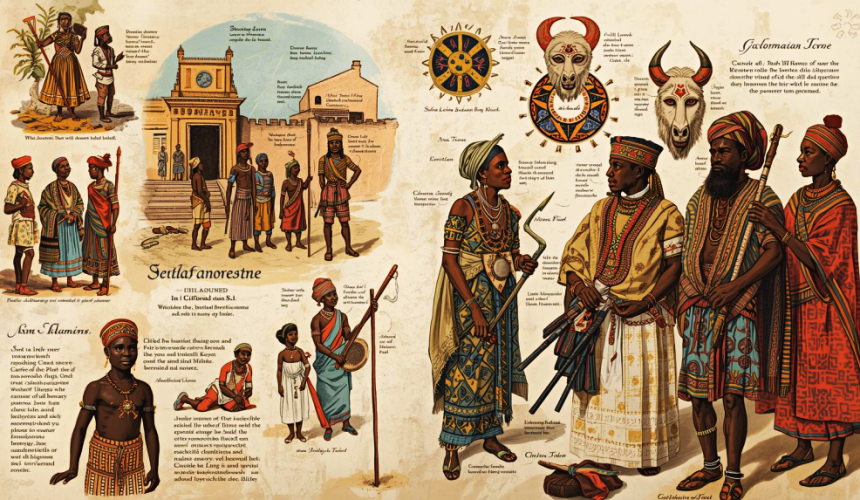
faama political culture warlord leadership
Faama Political Culture based on War Lord Leadership

4. Fadenya vs. Badenya: Rivalry and Cohesion in Politics

Within Mandé political thought, the concepts of Fadenya and Badenya represent two fundamental forces that shape the dynamics of leadership and social organisation. Fadenya, translated as “father-childness,” embodies competition, ambition, and the drive for innovation. It is the motivating force that encourages individuals and groups to challenge existing hierarchies, pursue reform, and instigate change within society. This spirit of rivalry and contestation is essential for progress and adaptation, as it pushes communities to confront corruption, reimagine institutions, and embrace new possibilities.

In contrast, Badenya, or “mother-childness,” signifies cohesion, respect for tradition, and the pursuit of collective harmony. Badenya is the stabilising force that fosters unity, preserves social bonds, and upholds communal values. It ensures that, even as individuals strive for personal advancement or reform, there remains a foundation of trust and mutual respect that binds the group together.

These dual forces do not operate in isolation. Rather, they work in tandem to create a balanced political system. A society driven exclusively by Fadenya may experience rapid innovation and transformation, but risks becoming fragmented and unstable. Conversely, an overemphasis on Badenya can result in stagnation, nepotism, and resistance to necessary change.

This interplay can be vividly illustrated: Fadenya is the fire that forges transformation, igniting new possibilities and driving societal evolution. Badenya, meanwhile, is the clay that binds society together, ensuring that change does not come at the expense of cohesion and enduring community values.

Balancing Fadenya and Badenya in Reformist Leadership

A reformist leader who seeks to address corruption within established elites must skillfully embody both Fadenya and Badenya. By embracing Fadenya, the leader channels ambition and the drive for change, challenging entrenched interests and advocating for institutional reform. This spirit of rivalry and contestation is essential for breaking down barriers and initiating progress.

At the same time, the leader must appeal to Badenya to uphold social cohesion and maintain trust in institutions. By fostering unity and respect for tradition, the leader ensures that the pursuit of change does not destabilise the community or erode the bonds that hold society together. The effective integration of both Fadenya and Badenya allows for transformative leadership that balances innovation with stability, enabling reform to occur within a framework of enduring communal values.

6. Griots: The Memory Keepers and Power Checkers

Griots hold a vital position in West African societies, serving not just as entertainers but as oral historians and moral anchors. Their role extends far beyond performance; they are the custodians of collective memory, preserving and transmitting the stories, values, and ethical standards that shape governance and social life.

Under Mansa’s leadership, griots occupy a respected advisory position. They act as both advisors and auditors to leaders, drawing upon their extensive knowledge of history and tradition. By preserving stories that establish a leader’s legitimacy, griots remind rulers of their past obligations and the ethical constraints that guide their authority. In this capacity, they serve as living archives, ensuring that leaders remain accountable to communal values and historical precedents. Their presence upholds the moral framework within which power is exercised, reinforcing the leader’s responsibility to uphold justice and fulfil promises made to the community.

Conversely, under Faama’s leadership, the role of griots is diminished or manipulated. Instead of serving as independent arbiters of memory and ethics, griots may be sidelined, coerced, or silenced altogether. When this happens, the collective memory they safeguard is distorted, and history is repurposed as propaganda to serve the interests of those in power. The vital function of the griot as a check on authority is eroded, undermining the community’s ability to hold leaders accountable and maintain a shared sense of moral direction.

The griot can be seen as the drumbeat of truth amid the noise of power persistent reminder of ethical standards and communal values. For example, the Epic of Sundiata, carefully preserved and recounted by griots, does more than narrate the achievements of Sundiata; it also reinforces the moral expectations placed upon leaders. Through such stories, griots remind rulers and communities alike of the standards by which leadership is judged and the ethical boundaries that must not be crossed.

7. Stability vs. Control: Diverging Governance Goals

Mansa Governance: Prioritising Institutional Stability

Mansa governance is characterised by its commitment to institutional stability, long-term planning, and inclusive dialogue. Leaders operating within this framework seek to cultivate an environment where policies and decisions are made with the future in mind, ensuring continuity and resilience. The emphasis on inclusive dialogue means that diverse voices are heard and considered, fostering unity and shared purpose among community members.

Faama Governance: Pursuing Dominance and Exclusion

In contrast, Faama governance centres on the pursuit of dominance, short-term victories, and exclusion. Leaders following this model often prioritise immediate gains and the consolidation of power, frequently at the expense of broader participation and long-term stability. The exclusion of dissenting voices and opposition reinforces divisions, making governance more susceptible to volatility and conflict.

Comparative Perspective: Western Democracies and Mansa Governance

While Western democracies invest in rule-based institutions to maintain order and stability, Mansa governance achieves similar ends through moral legitimacy and a sense of intergenerational responsibility. The foundation of Mansa governance is the ethical authority of leaders and their accountability to both present and future generations, as opposed to reliance solely on codified laws and regulations.

Insight: Balancing Legitimacy and Pragmatism

Sustainable governance requires a careful balance between legitimacy, as exemplified by the Mansa approach, and pragmatism, as seen in the Faama model. By integrating the moral and inclusive principles of Mansa governance with the practical considerations of Faama governance, societies can establish systems that are both resilient and adaptable to changing circumstances.


8. Case Study: Sierra Leone’s Political Landscape

Party Rivalries and Faama Dynamics

Rivalries between the Sierra Leone People’s Party (SLPP) and the All People’s Congress (APC) exemplify the logic of Faama governance, where political life is often treated as a zero-sum competition. This approach frequently manifests in violence and ethnic patronage, as seen in events like the Ndogboyosoi War, clashes during elections and more. The pursuit of dominance and exclusion characterises interactions between these parties, intensifying divisions and perpetuating conflict.

Elite Competition and the Absence of Moderating Influence

Elite competition in Sierra Leone flourishes under these Faama dynamics. However, without the moderating influence of Badenya—the principle of communal harmony and restraint—such competition leads to institutional fragmentation. The unchecked drive for individual or factional advantage undermines unity and weakens the foundations of governance.

Ethnic Framing as a Political Instrument

Ethnicity in Sierra Leone’s politics is not inherently divisive; rather, it becomes a tool for manipulation and consolidation of power. Political actors instrumentalise ethnic identities to advance their interests, using diversity to reinforce patronage networks and fuel rivalry, rather than fostering genuine inclusivity.

Key Point: Governance and Instability

The instability observed in Sierra Leone’s political system arises primarily from the dominance of Faama-style governance, rather than from the existence of ethnic divisions themselves. It is the strategic manipulation of competition and exclusion, rather than diversity, that drives fragmentation and volatility within the country’s institutions.

Reviving the Mansa Ethos: Pathways to Political Transformation

Achieving lasting political transformation in Sierra Leone and throughout Africa depends on a renewed commitment to legitimacy, service, and accountability. Leaders are called to embrace Mansa values, which emphasise wisdom, restraint, and collective service. These principles must become the foundation for governance, guiding actions and decisions toward the greater good.

Balancing Fadenya and Badenya in Institutions

For institutions to thrive, there must be a thoughtful balance between Fadenya—the energy of competition and individual ambition—and Badenya—the principle of communal harmony and restraint. This equilibrium is essential to prevent fragmentation and ensure that institutional structures support unity and effective governance.

The Role of Civic Griots

In contemporary society, civic griots include journalists, educators, and elderly people. These individuals have a vital role in reminding leaders of their obligations to the community. Empowering civic griots is crucial for maintaining an environment where leaders remain accountable and serve the collective interests of their people.

Building on Cultural Wisdom

Africa’s political future should not rely solely on imported systems. Instead, it must be grounded in the continent’s rich cultural wisdom. By drawing on enduring values and traditions, societies can create governance models that are both legitimate and sustainable.

Final Takeaway: Mansa Versus Faama Leadership

Mansa leadership is defined by the power of remembered service, while Faama leadership is characterised by the power of feared control. To sustain democracy and promote stability, it is essential to revive and prioritise cultural models that favour Mansa leadership, fostering service, accountability, and collective well-being.


References

Bird, C. S., & Kendall, M. (1980). The Mande Hero: Text and Context. Africa Today.
Camara, M. S. (2014). Historical Dictionary of Guinea. Rowman & Littlefield.
Chabal, P., & Daloz, J.-P. (1999). Africa Works: Disorder as Political Instrument. James Currey.
Johnson, J. W. (1992). The Epic of Sunjata: Versions from Mali. Indiana University Press.
“Mende People.” (n.d.). Wikipedia.
“Sierra Leone People’s Party.” (n.d.). Wikipedia.
“Ndogboyosoi War.” (n.d.). Wikipedia.

Bibliography

  • Bird, C. S., & Kendall, M. (1980). The Mande Hero: Text and Context. Africa Today.
  • This work explores the role of the hero in Mandé societies, situating leadership models within their cultural and oral traditions. It provides insight into how stories and legends inform the behaviours and expectations of leaders in West African contexts.
  • Camara, M. S. (2014). Historical Dictionary of Guinea. Rowman & Littlefield.
  • This dictionary offers a comprehensive background on Guinea’s history, including key terms, concepts, and figures relevant to the Mandé political and cultural frameworks discussed.
  • Chabal, P., & Daloz, J.-P. (1999). Africa Works: Disorder as Political Instrument. James Currey.
  • Chabal and Daloz examine the use of disorder and the manipulation of social structures as tools of political power in Africa, providing context for understanding how competition and patronage shape governance.
  • Johnson, J. W. (1992). The Epic of Sunjata: Versions from Mali. Indiana University Press.
  • This collection presents different versions of the foundational Mandé epic, demonstrating the deep historical roots of leadership ideals such as Mansa and Faama.
  • “Mende People.” (n.d.). Wikipedia.
  • This entry provides an overview of the Mende ethnic group, whose social structures and cultural values are important for understanding the interplay of ethnicity and politics in Sierra Leone.
  • “Sierra Leone People’s Party.” (n.d.). Wikipedia.
  • This article outlines the history and role of the Sierra Leone People’s Party in the country’s political development, highlighting how party politics intersect with ethnic identities.
  • “Ndogboyosoi War.” (n.d.). Wikipedia.
  • This source details the Ndogboyosoi War, a significant conflict in Sierra Leone’s recent history, illustrating the consequences of political competition and the manipulation of division.


Upper 20Guinea 20Coast 300x225
Anthropology
Mohamed Boye Jallo Jamboria

The Anthropology of the Upper Guinea Coast (10th Century to Present)

Introduction The Upper Guinea Coast, encompassing modern-day Guinea, Sierra Leone, Liberia, and parts of Senegal and Côte d’Ivoire, has long been a vital crossroads of cultural exchange and historical significance. This region, rich in natural resources and diversity, has evolved from agricultural and fishing communities of the 10th century to a complex cultural mosaic shaped by

Read More »
A 20refined 20organizational 20hierarchy 20chart 20clearly 20displaying 20the 20governance 20structure 20of 20Sierra 20Leone 300x300
Politics and Development
Mohamed Boye Jallo Jamboria

Chiefdoms, Chiefs, and Decentralisation in Sierra Leone

This article explores the role of chiefdoms and traditional chiefs in Sierra Leone’s decentralisation process. It examines how chiefdom administrations influence local governance, strengthen grassroots leadership, and support sustainable community development across the country.

Read More »

Understanding Poverty in West Africa

West Africa is endowed with vast natural resources and a rich cultural heritage, yet it remains one of the poorest regions in the world. According to the World Bank (2020), poverty rates in West Africa exceed 40%, with some countries, such as Niger and Mali, experiencing extreme deprivation. The persistence of poverty in the region

Read More »
Class 20System00 300x171
Anthropology
Mohamed Boye Jallo Jamboria

The Class and Respect Issues Among the Africans

Class and respect dynamics within African societies and the African diaspora represent an intricate interplay of history, culture, and socio-economic structures. These issues are deeply rooted in pre-colonial traditions, colonial disruptions, and modern global influences. Understanding how class stratification and respect norms have evolved within African communities requires examining their historical context, cultural manifestations, and

Read More »
Digital 20illustration 20representing 20political 20polarization 20in 20Sierra 20Leone. 20The 20image 20depicts 20larger 20opposing 20groups 20of 20people 20standing 20on 20either 20side 300x171
Anthropology
Mohamed Boye Jallo Jamboria

The Politics of Polarization in Sierra Leone: Navigating Division in a Culturally Homogeneous Society

      Sierra Leone is a nation that embodies a paradox of cultural unity and political fragmentation. Despite being one of the most culturally and religiously homogeneous countries in Africa, the country remains deeply polarized along regional and partisan lines. The dominant Islamic faith and the Fulani-Mande cultural foundation create profound commonalities among Sierra

Read More »
0 Shares