
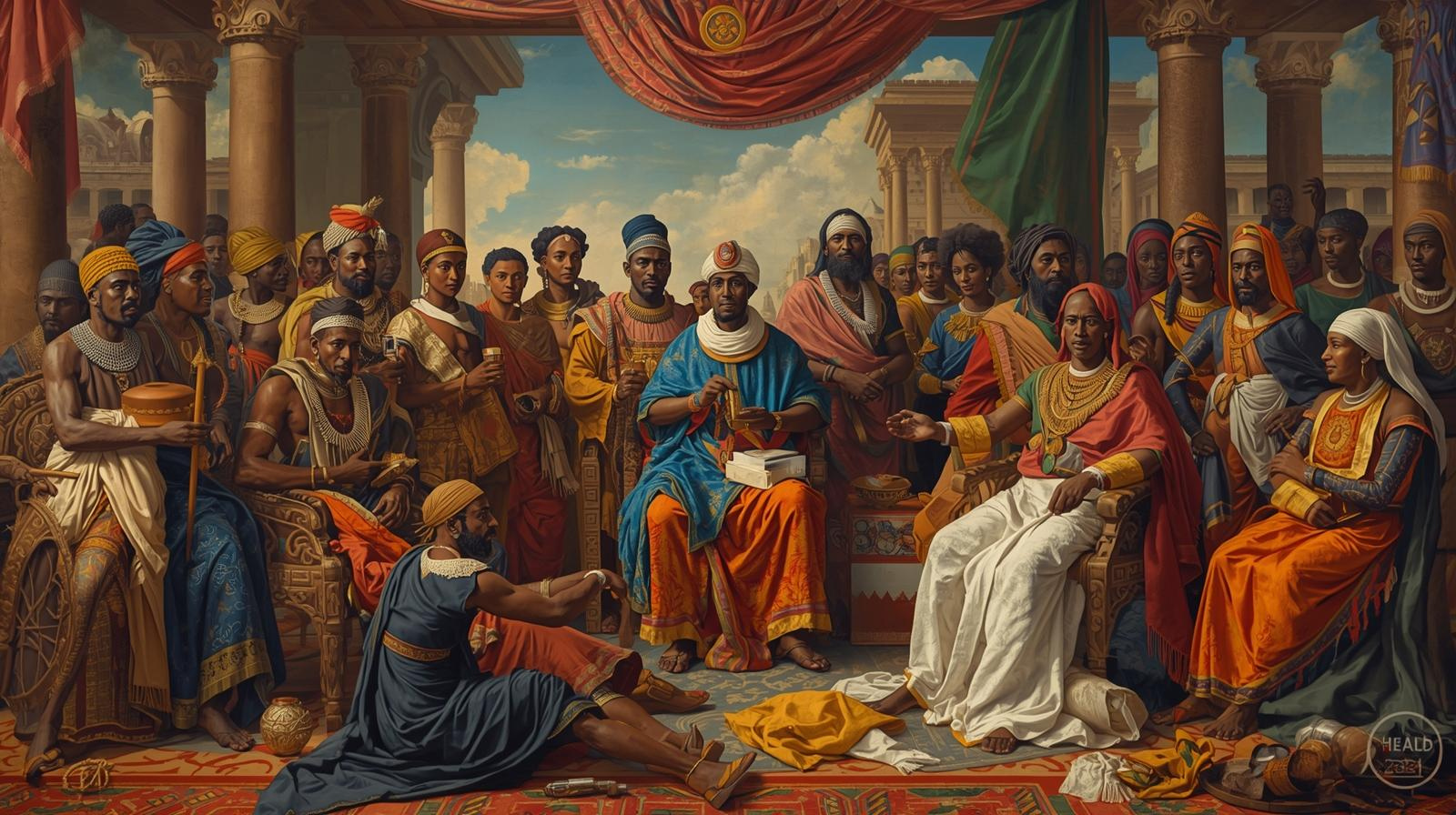
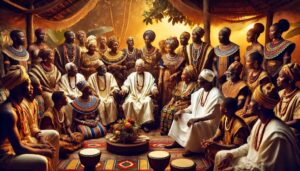
The archetype of Mansa defines leadership within the Mandé cultural framework as one anchored in moral legitimacy, restraint, wisdom, and a deep connection to communal values. Unlike rulers who govern through force or coercion, Mansa’s authority is derived from ancestry and the validation of griots, the traditional custodians of history and culture. The legitimacy of the Mansa is not established by decree, but by a continual process of service to the people, responsiveness to their needs, and accountability to the stories and collective memory of the community. This is encapsulated in the Mandé proverb: “A Mansa does not rule by decree. He is summoned by the people’s needs and judged by the people’s stories.”
Historically, Sundiata Keita, the founder of the Mali Empire, serves as the quintessential example of the Mansa archetype. His leadership, as chronicled in The Epic of Sundiata, was marked by diplomacy, the observance of rituals, and the ability to unify disparate groups without resorting to coercion. Sundiata’s approach to governance emphasised consensus-building, respect for tradition, and the integration of diverse interests through moral guidance and cultural rituals.
In contemporary terms, Nelson Mandela’s leadership mirrors the qualities of Mansa. Mandela’s commitment to reconciliation, wisdom, and moral authority over revenge resonates with the ethos of Mandé leadership. His actions prioritised healing and unity, demonstrating that true power lies in the capacity to embody ethical principles and serve the collective good. Through this lens, Mansa represents a model of leadership that privileges moral legitimacy and communal harmony above personal ambition or authoritarian control.
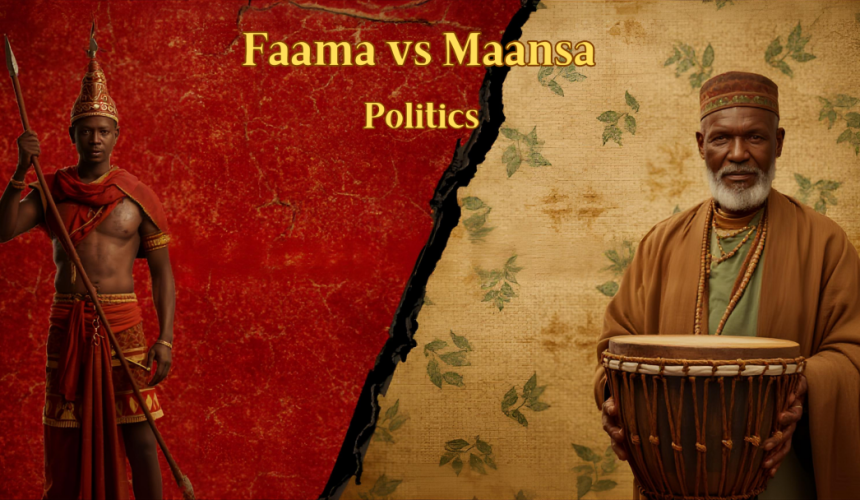
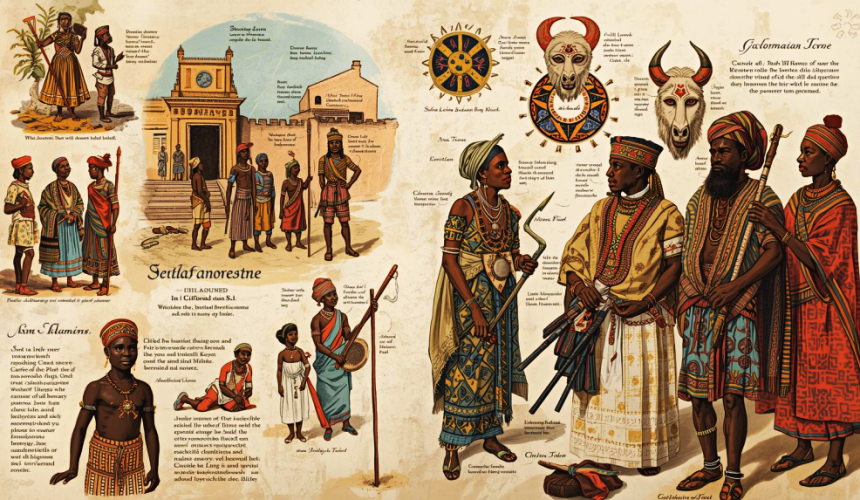
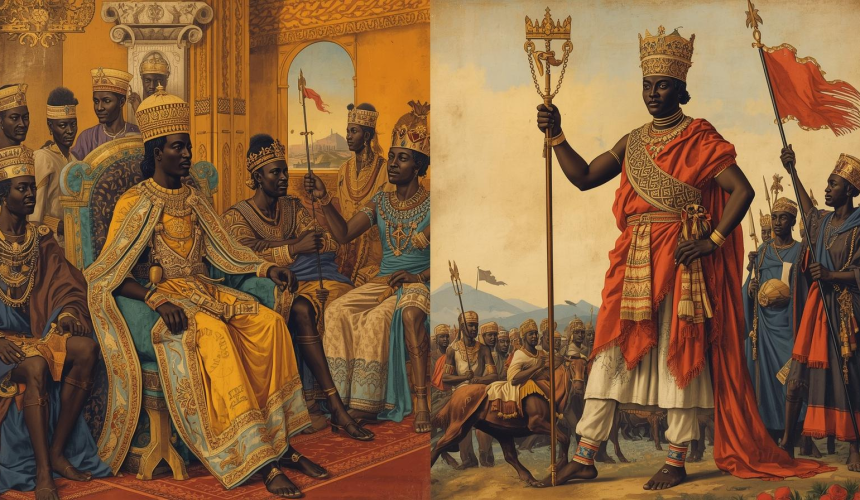
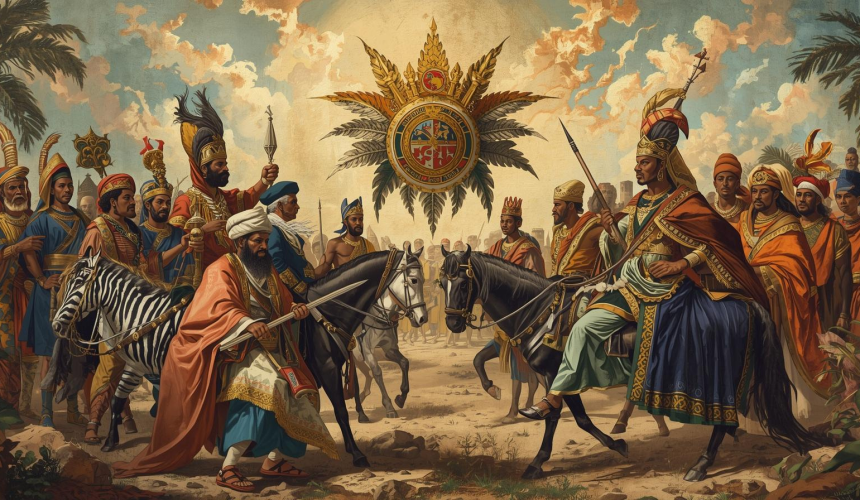
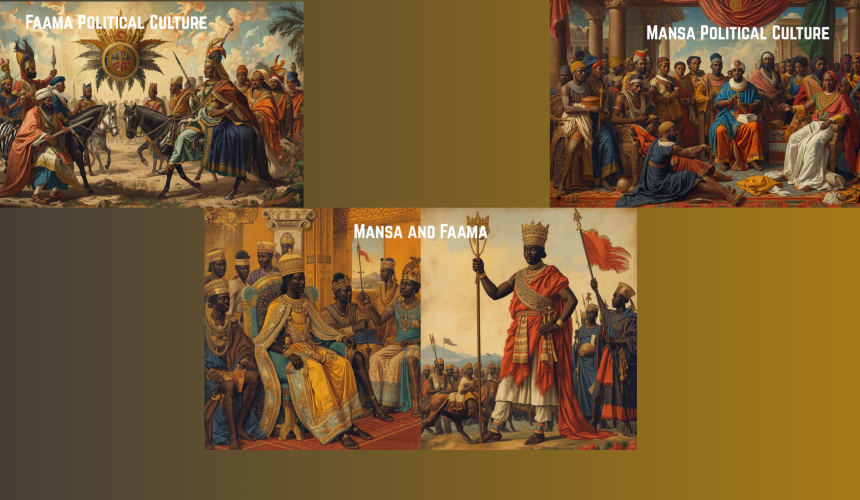

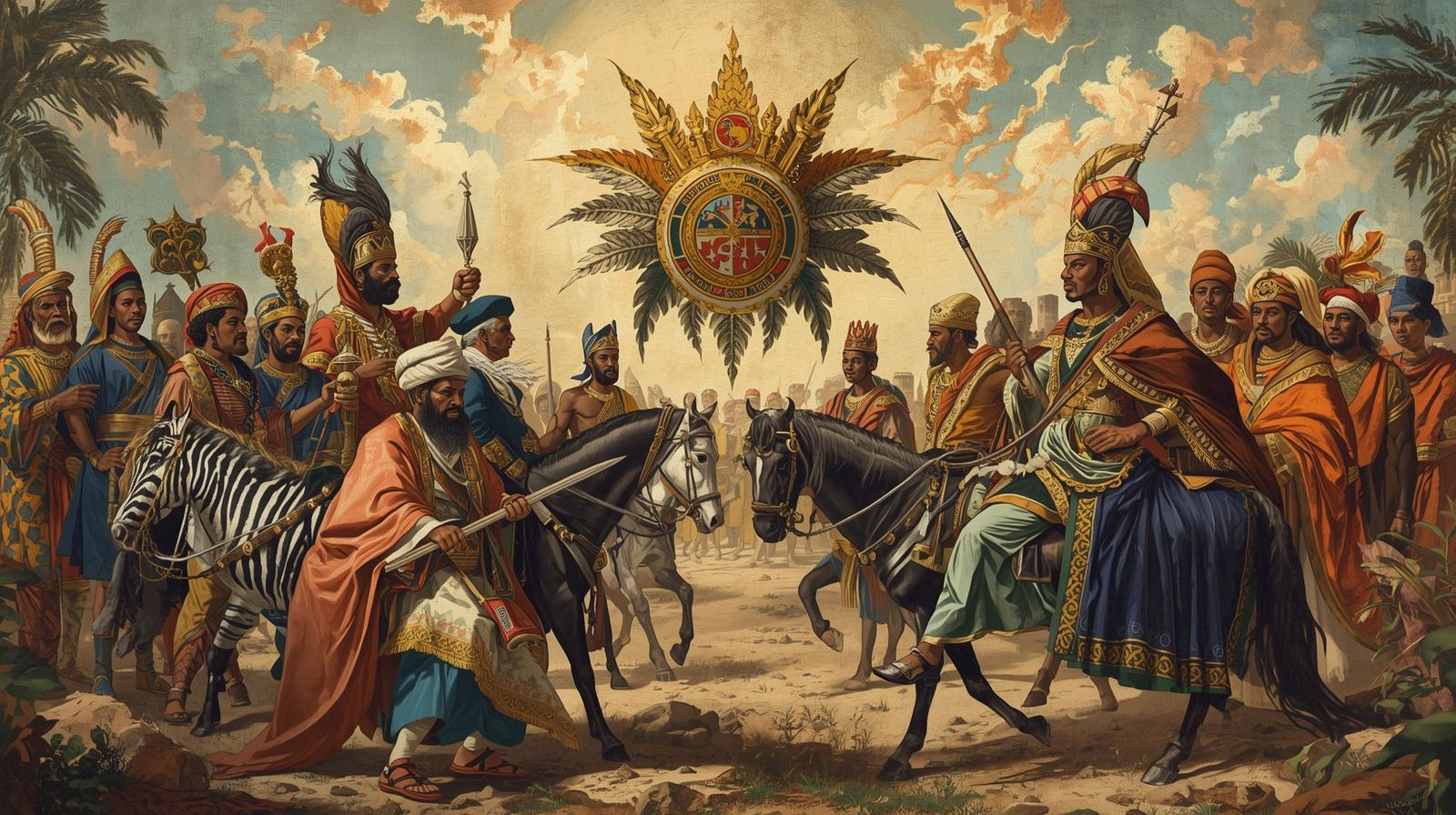
The concept of Faama authority stands in sharp contrast to the Mansa model of leadership. Rather than drawing power from moral legitimacy, communal service, or ancestral validation, the Faama’s rule is grounded in the exertion of force, military strength, and the strategic use of dominance. In this framework, loyalty is not something that is freely given by the community; instead, it is compelled through mechanisms of fear, intimidation, and coercion. The Faama maintains authority by forging alliances that are often transactional, leveraging power to suppress opposition and maintain control over resources and people.
Historically, as the Mali Empire declined, the absence of griot validation led to the emergence of local Faamas whose authority was maintained through immediate, often violent, displays of power. These leaders prioritised short-term gains and dominance over the long-term legitimacy or cohesion that characterised Mansa-style governance. The reliance on violence and intimidation, rather than on shared stories and communal memory, marked a significant departure from the traditions that once unified society (Camara, 2014).
Modern parallels to Faama leadership can be observed in the military regimes that took power in Sierra Leone during the 1990s, as well as in Liberia under Samuel Doe. These regimes exemplified the characteristics of Faama authority operating through authoritarian control, the establishment of patrimonial networks, and the systematic suppression of dissent. In these contexts, leadership was maintained not through consensus or moral guidance, but through the concentration of power, exclusionary alliances, and the use of force to stifle opposition and perpetuate control (Chabal & Daloz, 1999).

Thank you for reading this post, don’t forget to subscribe! Class and respect dynamics within African societies and the African
Education and Development Thank you for reading this post, don’t forget to subscribe! Education is more than a tool for

The country called Sierra Leone today has a history with a powerful Malinke connection.
Thank you for reading this post, don’t forget to subscribe! Sierra Leone, a nation rich in culture and natural resources,
The Cultural Anthropology of the Mano River Union The Mano River Union (MRU) is a regional body in West Africa